Three records with different jobs
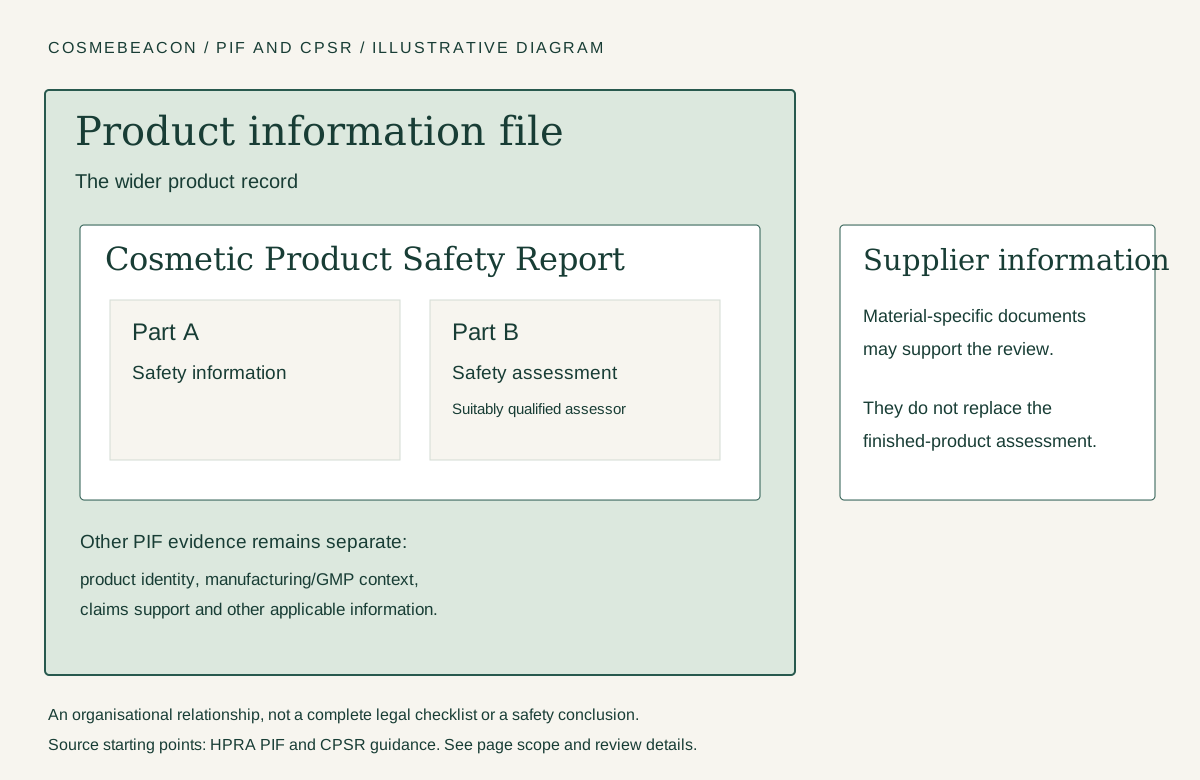
The PIF is the wider product file. The CPSR is a product-safety report within that file. A supplier safety data sheet, where available and relevant, is supporting information about a supplied material; it is not an interchangeable name for either of the first two records.
ECHA's safety-data-sheet guidance describes information about a substance or mixture, its hazards and measures for safe handling and use. That communication purpose is different from the finished cosmetic product assessment. The actual SDS supply and use requirements need their own case-specific chemicals review.
HPRA distinguishes the PIF's components and describes the CPSR's two parts. Use that relationship to organise the records before asking the reviewer to assess their adequacy.
Read the nesting diagram
The review packet contains a diagram of this relationship: the PIF is the outer record; the CPSR sits within it; Part A and Part B sit within the CPSR. Supplier material information sits outside that nesting and can inform the relevant evidence. The diagram is an organisational aid, not a complete specification of every required document.
Do not interpret an arrow from supplier information as an automatic transfer of a safety conclusion. The intended product, composition, exposure and other case-specific facts still need specialist consideration.
Avoid three common substitution mistakes
- A supplier document for one ingredient does not become a safety assessment of the finished product because it is uploaded to the product folder.
- A CPSR does not replace the remaining PIF evidence areas.
- A folder named PIF does not establish that the file contains the necessary current, product-specific evidence.
When someone says a document is missing, ask which question the document is intended to answer. Record that question, the current evidence and the person qualified to decide whether it is sufficient. This is more useful than adding another file solely to increase a document count.
A synthetic mismatch
Sample Product A has two supplier safety documents and a report that names an earlier product version. The current artwork makes an additional claim. No reviewer has confirmed the relationship between the earlier assessment and the current product.
Record the supplier documents as present, the old report as requiring a scope check and the new claim as an unresolved evidence question. Do not relabel the two supplier files as the CPSR, or present the old report as a current decision without a justified review.
Prepare a clearer handover
Send the reviewer an index that distinguishes finished-product records, supplier material information and claims/manufacturing evidence. Identify the exact specification and the question about each attachment. Keep source documents available without treating their existence as approval.
This page does not decide whether an SDS is required for a particular supply situation or interpret the separate chemicals framework. That question needs its own source and scope review. Read the diagram with its source and review details; it does not establish the obligations for an individual supply situation.
Sources and legal dates
HPRA: PIF guidance: product-specific file, components and retention; cross-check current Article 11 before publication
Ireland / EU · Version: Live web guidance retrieved 16 October 2026 · Retrieved: 2026-10-16 · Legal effective date: See the legal-date basis below
Source type: Official guidance
Do not infer a legal date from the web retrieval date. The legal basis and applicable dates require Frances's review.
Retention triggers, version scope and cross-market applicability need specialist confirmation.
HPRA: CPSR guidance: Part A, Part B, qualified assessor and Responsible Person information duties
Ireland / EU · Version: Live web guidance retrieved 16 October 2026; corrected canonical CPSR URL · Retrieved: 2026-10-16 · Legal effective date: See the legal-date basis below
Source type: Official guidance
The draft has not independently verified the full current consolidated regulation or Annex I. Guidance retrieval does not establish legal application dates.
Actual assessor qualifications, scope and required information must be checked for the case.
European Chemicals Agency: Official safety-data-sheet guidance: chemical hazard and safe-use communication purpose; no case-specific duty determined
EEA chemicals framework; applicability requires separate review · Version: Official page body excerpt checked 16 October 2026 · Retrieved: 2026-10-16 · Legal effective date: See the legal-date basis below
Source type: Official guidance
The guidance retrieval date is not a REACH or CLP application date. The relevant chemicals rules require their own specialist review.
No statement about whether an SDS is required for a particular finished cosmetic supply is made.